Diesel generators are widely used for construction sites, factories, hospitals, and backup power systems. While they provide reliable electricity, one common issue operators face is excessive noise. Many users start searching for how to soundproof a diesel generator after installing a generator near a building or residential area.
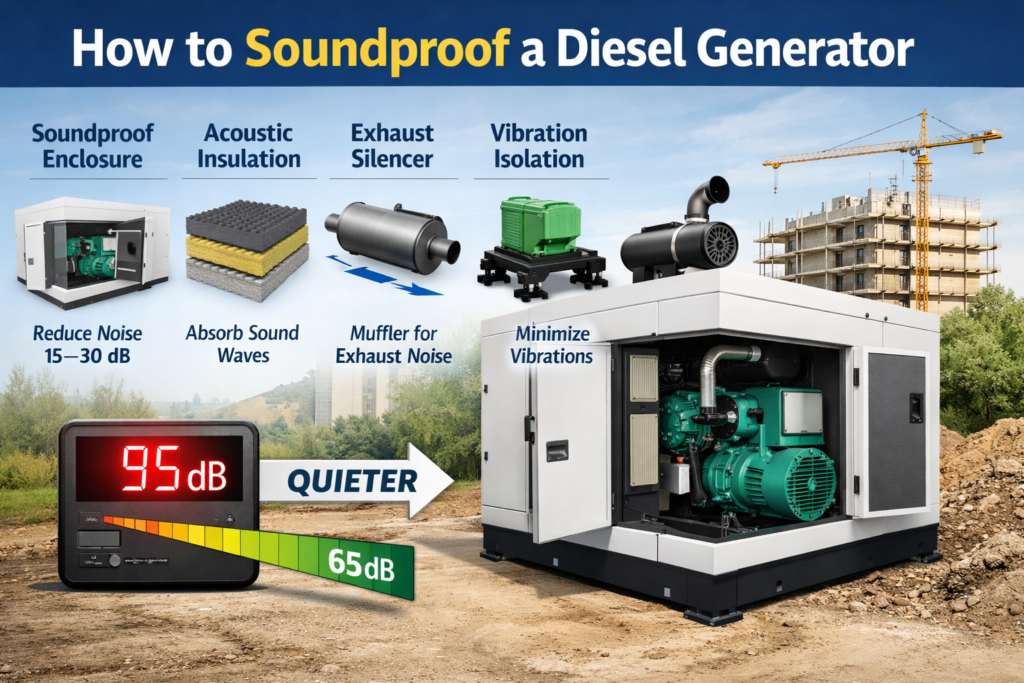
A typical diesel generator can produce 75–100 dB of noise, depending on its power capacity and engine design. If the generator is installed without proper noise control, it can affect nearby workers and the surrounding environment.
Fortunately, there are several proven diesel generator noise reduction methods that can significantly lower the sound level. With the right combination of insulation, enclosure design, and exhaust silencing, it is possible to make a generator much quieter.
Why Diesel Generators Produce So Much Noise
Before looking at how to reduce diesel generator noise, it helps to understand where the sound actually comes from. In most generator systems, noise is generated from several different sources.
Engine combustion noise
The diesel engine operates under high compression. When fuel ignites inside the cylinder, it produces strong combustion pressure. This is one of the main reasons why diesel engines are louder than gasoline engines.
Mechanical vibration
Inside the generator engine, moving parts such as pistons, crankshafts, and valves create constant vibration. These vibrations travel through the generator frame and can amplify noise if the machine is installed directly on concrete or metal surfaces.
Exhaust system noise
Another major contributor to generator noise is the exhaust system. High-pressure exhaust gases leaving the engine create a sharp sound, which is why installing a diesel generator exhaust silencer can make a noticeable difference.
Cooling airflow noise
Most industrial generators use large cooling fans to maintain engine temperature. These fans move a large volume of air, which also adds to the total noise level.
Understanding these noise sources helps determine the best approach when deciding how to make a diesel generator quieter.
Install a Diesel Generator Soundproof Enclosure
One of the most effective ways to reduce generator noise is installing a diesel generator soundproof enclosure.
A soundproof enclosure is essentially a protective canopy designed with both noise insulation and ventilation in mind. These enclosures are commonly used in industrial generator sets and are often referred to as silent diesel generator canopies.
A typical enclosure includes:
- Steel or aluminum outer panels
- Acoustic insulation layers
- Air intake and exhaust ventilation systems
- Maintenance access doors
With proper design, a soundproof generator enclosure can reduce noise by 15–30 dB, which is often enough for commercial or residential installations.
Use Acoustic Insulation Materials Around the Generator
Another practical solution for diesel generator soundproofing is installing acoustic materials around the generator area.
When building a generator room or enclosure, many operators install materials designed to absorb sound waves and reduce sound reflection.
Common diesel generator soundproofing materials include:
- Acoustic foam panels
- Rock wool insulation
- Mass loaded vinyl (MLV)
- Soundproof blankets
Rock wool is widely used in generator installations because it provides both heat resistance and sound absorption, which makes it suitable for engine environments.
Using multiple layers of acoustic materials can significantly improve diesel generator noise reduction performance.
Install a Generator Exhaust Silencer
If you’re looking for a quick way to reduce diesel generator noise, upgrading the exhaust system is one of the most effective options.
A diesel generator exhaust silencer (also called a muffler) is designed to reduce the sound produced when exhaust gases exit the engine.
There are several types of silencers available:
- Residential silencers
- Industrial silencers
- Critical-grade silencers
For applications where low noise is important, a critical silencer can reduce exhaust noise by up to 35–40 dB.
Many modern generator manufacturers already include high-performance silencers in their generator systems.
Reduce Generator Vibration With Isolation Mounts
Sometimes the noise from a generator is not only airborne but also transmitted through structures. In these cases, installing vibration isolation components can help.
To reduce vibration-related noise, operators often install:
- Rubber anti-vibration pads
- Spring vibration isolators
- Flexible exhaust connectors
These components help prevent mechanical vibration from transferring to the floor or building structure, which improves overall diesel generator noise control.
Build a Soundproof Generator Room
For larger industrial generators, another solution is constructing a soundproof generator room.
This approach is commonly used in factories, data centers, and hospitals where generators must run regularly.
A well-designed generator room usually includes:
- Thick concrete or brick walls
- Acoustic insulation panels
- Soundproof ventilation ducts
- Noise-reducing air intake systems
Ventilation is extremely important in this type of installation. A generator needs sufficient airflow for cooling, so the soundproof design must allow air circulation without letting too much noise escape.
How Much Can Generator Noise Be Reduced?
With proper planning, generator noise can be reduced significantly.
In many installations, combining different diesel generator noise reduction methods can lower the sound level by 30–50 decibels.
For example:
| Noise Reduction Method | Typical Effect |
|---|---|
| Soundproof enclosure | 15–30 dB |
| Exhaust silencer | 20–40 dB |
| Acoustic insulation | 10–25 dB |
| Vibration isolation | 5–10 dB |
Using several methods together is the most effective approach when learning how to soundproof a diesel generator properly.
FAQ: Diesel Generator Noise Reduction
How can I make my diesel generator quieter?
The most common solutions include installing a diesel generator soundproof enclosure, adding acoustic insulation materials, upgrading the generator exhaust silencer, and using vibration isolation mounts. Combining these methods can significantly reduce diesel generator noise.
What is the best way to reduce diesel generator noise?
The most effective approach is to combine several diesel generator noise reduction methods, such as installing a silent generator canopy, using acoustic insulation, and adding a high-efficiency exhaust silencer.
Are silent diesel generators completely silent?
Silent diesel generators are not completely noise-free. However, a well-designed silent diesel generator with soundproof enclosure can operate at around 60–70 dB at 7 meters, which is much quieter than open-type generators.
How loud is a typical diesel generator?
A typical open-frame diesel generator noise level ranges between 75–100 dB, depending on generator capacity, engine type, and installation environment.
Large industrial generators above 200 kW can sometimes exceed 100 dB if no noise reduction system is installed.
Do generator soundproof boxes really work?
Yes. A well-designed diesel generator soundproof box or enclosure can reduce noise by 15–30 dB. High-quality industrial silent generator enclosures use multi-layer acoustic insulation and ventilation sound traps to reduce noise while maintaining proper airflow.
What materials are best for diesel generator soundproofing?
Common diesel generator soundproofing materials include:
- Rock wool insulation
- Acoustic foam panels
- Mass loaded vinyl (MLV)
- Soundproof blankets
These materials help absorb sound waves and reduce noise transmission from the generator.
Can I build a soundproof box for my generator?
Yes, many users build a DIY generator soundproof box using metal panels and acoustic insulation materials. However, the enclosure must include proper air ventilation and heat dissipation, otherwise the generator may overheat.
What is the quietest type of diesel generator?
The quietest generators are usually silent diesel generators with factory-designed acoustic enclosures. These generators include built-in insulation, exhaust silencers, and vibration isolation systems to maintain lower noise levels.
Conclusion
Understanding how to soundproof a diesel generator is important for improving working conditions and reducing environmental noise. By using a combination of soundproof enclosures, acoustic insulation materials, exhaust silencers, and vibration isolation, generator noise can be reduced to a much more acceptable level.
Whether the generator is used for industrial power supply, construction sites, or backup electricity, proper soundproofing ensures reliable operation without excessive noise.