In power generation systems, power factor plays an important role in how efficiently electricity is used. For diesel generators used in industrial facilities, construction sites, hospitals, and commercial buildings, the power factor directly influences generator performance, load capacity, and operating stability.
Many generator users wonder whether increasing the power factor will affect the generator itself. In practice, the answer is yes. A higher power factor can improve efficiency and reduce electrical losses, but the generator must still operate within its design limits.
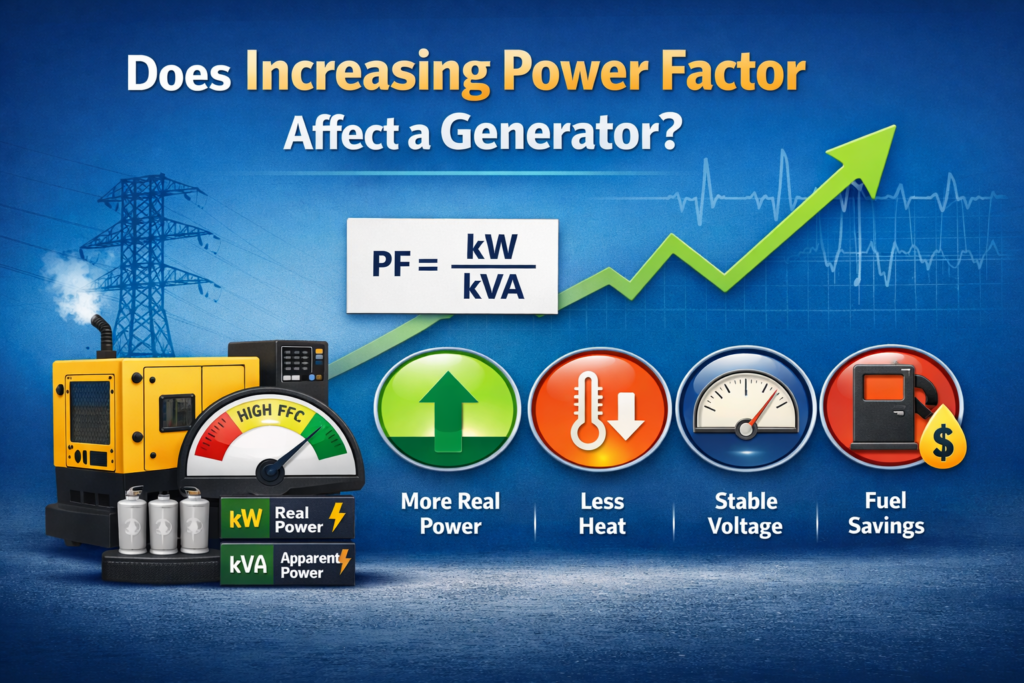
Understanding how power factor works helps operators get the most from their diesel generator while maintaining reliable performance.
What Is Power Factor in Generator Systems?
Power factor represents how efficiently electrical power is converted into useful work. It is defined as the ratio between real power and apparent power.
PF = \frac{kW}{kVA}
Where:
- kW (kilowatts) refers to the actual usable power consumed by equipment
- kVA (kilovolt-amperes) represents the total electrical power supplied by the generator
- Power factor (PF) indicates how effectively the electrical system uses power
Most diesel generators are rated at a power factor of 0.8, which means that a generator converts about 80% of its apparent power into usable output power.
For example, a 375 kVA diesel generator operating at 0.8 PF can deliver approximately 300 kW of real power.
How Increasing Power Factor Affects Generator Operation
Higher Power Factor Improves Electrical Efficiency
When the power factor increases, less reactive power circulates in the electrical system. This allows more of the generator’s output to be used as real power.
In practical terms, this means:
- lower electrical losses
- improved energy efficiency
- better use of generator capacity
For industrial diesel generators that operate for long periods, this improvement can make a noticeable difference in operating efficiency.
More Real Power Available from the Same Generator
Because generator ratings are typically expressed in kVA, the usable output power depends on the power factor.
If the power factor improves, the generator can deliver more real power without increasing its kVA rating.
For example:
| Generator Rating | Power Factor | Usable Power |
|---|---|---|
| 1000 kVA | 0.8 | 800 kW |
| 1000 kVA | 0.9 | 900 kW |
This is one reason many industrial facilities install power factor correction systems to improve electrical efficiency.
Reduced Current and Lower Heat in Generator Windings
Low power factor requires higher current to deliver the same amount of real power. Higher current increases electrical losses and causes additional heating in generator windings.
When the power factor improves:
- current flowing through the generator decreases
- copper losses are reduced
- generator temperature becomes more stable
This helps extend the service life of the generator and improves reliability during long operating periods.
Improved Voltage Stability
Inductive loads such as motors, compressors, and pumps tend to lower power factor and can cause voltage fluctuations in generator systems.
When the power factor increases, the generator experiences:
- better voltage regulation
- more stable electrical output
- improved performance under load changes
This is especially important in facilities that rely on consistent voltage, such as hospitals or data centers.
Is a Higher Power Factor Always Better?
Although increasing the power factor is generally beneficial, it should still remain within reasonable limits.
Most diesel generators are designed around 0.8 lagging power factor conditions. Running the generator at a power factor extremely close to 1.0 does not usually create problems, but in some systems it may affect voltage regulation or load response.
In real applications, a power factor between 0.85 and 0.95 is commonly considered a good operating range.
Common Methods to Improve Generator Power Factor
Power factor can be improved by reducing reactive power in the electrical system. Several practical methods are commonly used.
Capacitor Banks
Capacitor banks supply reactive power that offsets inductive loads, improving the overall system power factor.
Automatic Power Factor Correction Panels
Automatic power factor correction (APFC) panels monitor system conditions and switch capacitors on or off to maintain an optimal power factor.
Efficient Electrical Equipment
Modern motors and electrical devices often have improved power factor characteristics, which helps maintain overall system efficiency.
Balanced Electrical Loads
Proper load management can also reduce reactive power and help maintain a stable power factor.
Real-World Example in Diesel Generator Systems
Many industrial facilities operate equipment that produces inductive loads, including:
- electric motors
- pumps
- compressors
- HVAC systems
These loads naturally reduce the power factor of the system.
In many factories, installing capacitor banks can increase the power factor from 0.75 to around 0.9, allowing the same diesel generator to supply more usable power without upgrading the generator capacity.
Frequently Asked Questions
What power factor are most diesel generators designed for?
Most industrial diesel generators are rated at 0.8 power factor, which is the standard used for generator sizing.
Does improving power factor reduce generator losses?
Yes. Higher power factor reduces current flow in the generator windings, which lowers electrical losses and reduces heating.
Can a diesel generator operate at power factor 1.0?
A generator can operate near unity power factor, but real electrical systems usually contain inductive loads that lower the overall power factor.
Why do motors reduce power factor?
Electric motors require reactive power to create magnetic fields. This reactive power lowers the overall power factor of the system.
How can I increase the power factor of a generator system?
The most common method is installing capacitor banks or automatic power factor correction systems to compensate for reactive power.
✅ Conclusion
Increasing power factor generally improves generator efficiency and allows more usable power to be delivered from the same generator capacity. It also reduces electrical losses and helps maintain stable voltage.