Low voltage in diesel generators is a problem that operators occasionally encounter in real power systems. When a diesel generator produces low voltage, connected equipment may not run properly, and motors or sensitive electronics can suffer performance issues. In industrial plants, construction sites, and backup power applications, maintaining stable generator voltage is essential. Understanding the causes of low voltage in diesel generators and knowing how to troubleshoot the problem can help restore reliable power quickly.
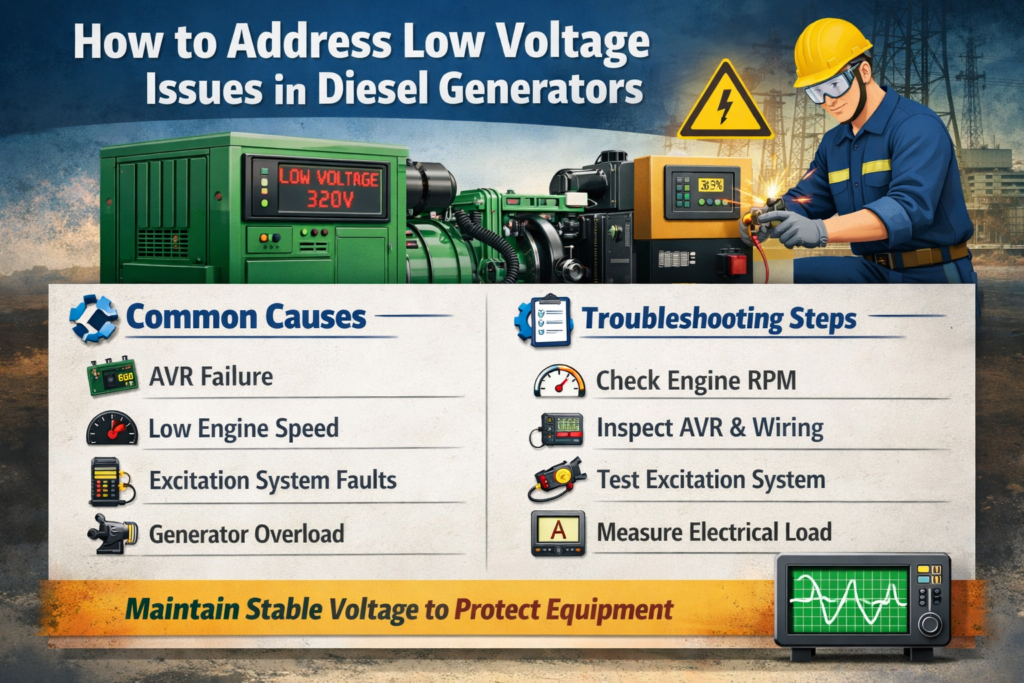
Common Causes of Low Voltage in Diesel Generators
In most cases, low voltage in diesel generators occurs because one of the key components in the power generation system is not operating correctly. Typical diesel generator voltage drop causes include problems with the voltage regulator, insufficient engine speed, excitation system faults, overloaded electrical circuits, or poor electrical connections. Identifying why diesel generator voltage is low is the first step toward solving the issue.
AVR Problems in Diesel Generators
One of the most common reasons for low voltage in diesel generators is diesel generator AVR failure. The Automatic Voltage Regulator (AVR) controls the excitation current that determines the alternator’s output voltage. If the AVR is faulty or incorrectly adjusted, the alternator cannot maintain stable voltage.
During maintenance, technicians often begin diesel generator voltage troubleshooting by checking the AVR wiring, measuring the output voltage, and adjusting the regulator settings. If the AVR is damaged internally, replacing it is usually the most effective way to fix the generator producing low voltage problem.
Low Engine Speed and Generator Voltage
Another common cause of low voltage in diesel generators is insufficient engine speed. The voltage and frequency produced by a generator depend on the engine maintaining the correct RPM. For example, generators designed for 50 Hz power normally operate at around 1500 RPM, while 60 Hz generators operate at approximately 1800 RPM.
When generator low voltage due to low RPM occurs, it is often related to fuel supply issues, governor malfunction, or restricted air intake. Because diesel generator voltage and engine speed are closely related, maintaining stable engine speed is essential for consistent electrical output.
Generator Overload
An overloaded generator is another frequent reason for low voltage in diesel generators under load. When the electrical demand exceeds the generator’s rated capacity, the alternator cannot maintain stable output voltage. This condition often results in generator voltage drop under load, especially in industrial applications where multiple machines start simultaneously.
To prevent an overloaded diesel generator voltage problem, operators should monitor load levels and ensure the generator operates within its rated power capacity. Installing proper load management systems can also help maintain stable generator performance.
Excitation System Problems
The alternator excitation system plays a key role in power generation. When generator excitation system failure occurs, the alternator cannot create a strong enough magnetic field to generate proper voltage. This can result in alternator excitation voltage problems, leading to unstable or reduced voltage output.
Common causes of excitation system faults include damaged rectifier diodes, worn carbon brushes, or rotor winding issues. Regular inspection of these components can help prevent low voltage in diesel generators caused by excitation system failure.
Loose or Corroded Electrical Connections
Electrical connection issues are often overlooked but can also lead to diesel generator voltage drop problems. Loose terminals, damaged cables, or corrosion can increase electrical resistance and cause voltage loss between the generator and connected loads.
Routine inspection of output terminals, cable connections, and grounding systems is an important part of diesel generator voltage maintenance. Keeping electrical connections clean and secure helps prevent generator voltage instability.
How to Troubleshoot Low Voltage in Diesel Generators
When performing diesel generator voltage troubleshooting, technicians usually follow a systematic process to identify the source of the problem.
Basic diagnostic steps include:
- Check engine speed and frequency output
- Inspect the AVR and voltage adjustment settings
- Measure electrical load to avoid overload conditions
- Examine the excitation system components
- Check wiring connections and output terminals
This step-by-step approach helps determine how to fix low voltage generator problems more efficiently and reduce downtime.
Preventing Diesel Generator Voltage Problems
Preventive maintenance is one of the best ways to avoid low voltage in diesel generators. Regular inspections of the voltage regulator, alternator, and engine performance can significantly reduce the risk of voltage instability.
Operators should also monitor generator load levels and perform routine servicing based on operating hours. Proper diesel generator voltage maintenance helps ensure reliable power output and extends the lifespan of generator equipment.
Frequently Asked Questions
Why is my diesel generator producing low voltage?
The most common reasons include diesel generator AVR failure, low engine speed, excitation system problems, or generator overload.
How can I fix low voltage in a generator?
To fix low voltage in diesel generators, technicians usually check the AVR settings, adjust engine RPM, inspect excitation components, and ensure the generator is not overloaded.
What causes generator voltage drop under load?
Generator voltage drop under load usually occurs when the generator capacity is insufficient or when the voltage regulator cannot compensate for increased demand.
How does engine speed affect generator voltage?
Because diesel generator voltage and engine speed are directly related, a drop in RPM will normally result in reduced voltage output.
How can generator voltage problems be prevented?
Regular inspection, proper load management, and scheduled maintenance are key steps in preventing diesel generator voltage problems.