When selecting a diesel generator for backup or prime power, one of the most important questions is: how long can a diesel generator run continuously?
The answer depends on generator type, fuel capacity, operating load, cooling system, and maintenance schedule. In general, a diesel generator can operate anywhere from 8 hours to several weeks, as long as it is properly maintained and refueled.
This article explains runtime differences by generator category and compares major engine brands commonly used in continuous power applications.
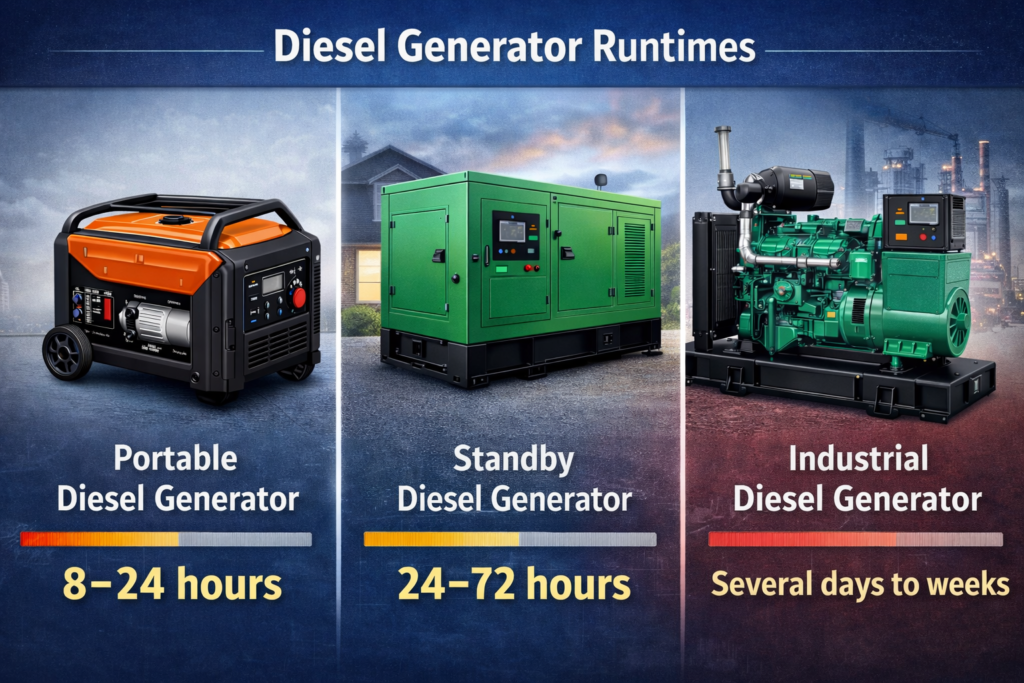
Average Continuous Runtime by Generator Type
| Generator Type | Typical Continuous Runtime |
|---|---|
| Portable Diesel Generator | 8–24 hours |
| Standby Diesel Generator | 24–72 hours |
| Industrial Diesel Generator | Several days to weeks |
During extended operation, inspection is typically recommended every 24–48 hours.
Portable Diesel Generators
Portable diesel generators are mainly used for temporary power supply.
- Small fuel tanks
- Usually air-cooled
- Designed for short-duration operation
Runtime per tank: approximately 8–12 hours, depending on load level.
They are not intended for continuous 24/7 use.
Standby Diesel Generators
Standby generators are permanently installed and automatically start during outages.
- Integrated automatic transfer switch
- Larger fuel tanks
- Suitable for residential and small commercial use
Continuous runtime: typically 1–3 days.
With external fuel storage, runtime can be extended.
Industrial Diesel Generators
Industrial generators are built for prime and continuous duty applications.
- Liquid-cooled systems
- Heavy-duty engine design
- Suitable for high-load environments
With sufficient fuel supply and scheduled maintenance, these generators can run continuously for days or even weeks.
Major Diesel Generator Engine Brands for Continuous Operation
Engine quality plays a critical role in long-term runtime and durability. The following brands are widely used in global power generation projects.
Cummins Inc.
Cummins engines are commonly used in hospitals, telecom stations, and industrial facilities. They are designed for continuous-duty performance and stable operation under medium to high load.
Perkins Engines Company Limited
Perkins engines are widely used in standby and industrial generator sets. They are known for fuel efficiency and reliable performance at 50–75% load.
MTU Friedrichshafen GmbH
MTU engines are typically used in large-scale infrastructure, marine, and industrial applications requiring uninterrupted power supply.
Shanghai Diesel Engine Co., Ltd. (SDEC)
Shanghai Diesel Engine Co., Ltd. (SDEC) is one of China’s major diesel engine manufacturers.
SDEC-powered generator sets are widely used in:
- Commercial buildings
- Infrastructure projects
- Manufacturing plants
They are designed for stable prime power operation and competitive cost-performance balance.
Guangxi Yuchai Machinery Group Co., Ltd. (Yuchai)
Yuchai engines are known for:
- Strong torque output
- Good fuel efficiency
- Broad domestic and international market presence
Yuchai-powered diesel generators are often selected for industrial and commercial applications that require continuous operation with controlled operating costs.
Key Factors That Affect Continuous Runtime
1. Load Percentage
Operating load directly influences fuel consumption and engine wear.
- Below 30% load: risk of carbon buildup
- 50–75% load: recommended operating range
- Above 90% load: increased stress and fuel consumption
For long-duration operation, maintaining 50–75% of rated capacity is generally considered optimal.
2. Fuel Availability
Fuel supply determines maximum uninterrupted runtime.
For example:
- 100 kW generator at 75% load: approximately 18–22 liters per hour
- 500 kW generator at 75% load: approximately 90–110 liters per hour
With bulk fuel tanks and monitoring systems, industrial generators can operate for extended periods without shutdown.
3. Cooling System
Air-cooled generators are suited for shorter runs.
Liquid-cooled generators are designed for longer continuous operation and heavy-duty workloads.
4. Maintenance Interval
Routine servicing is essential during extended operation.
Typical maintenance schedule:
- Oil change: every 100–250 hours
- Fuel and air filter replacement: 250–500 hours
- Regular inspection during continuous use
Proper maintenance significantly extends engine life, often beyond 20,000–30,000 operating hours for industrial models.
Can a Diesel Generator Run 24/7?
Yes. Many industrial diesel generators are rated for prime or continuous power applications, including:
- Hospitals
- Data centers
- Manufacturing plants
- Construction sites
- Remote infrastructure
Continuous 24/7 operation is achievable with proper fuel management, ventilation, and maintenance planning.
Frequently Asked Questions
How long can a diesel generator run without stopping?
Portable models: 8–24 hours
Standby models: 1–3 days
Industrial models: several days to weeks with refueling
Can Cummins, SDEC, or Yuchai generators run continuously?
Yes. Industrial models powered by Cummins Inc., Shanghai Diesel Engine Co., Ltd., and Guangxi Yuchai Machinery Group Co., Ltd. are designed for continuous-duty or prime power operation when maintained correctly.
How often should oil be changed during continuous operation?
Typically every 100–250 hours, depending on engine model and operating conditions.You can refer to this article for more details“How Often Should You Change Diesel Generator Oil?”
Is diesel suitable for long-term continuous power?
Diesel engines are generally more fuel-efficient and more durable under heavy loads compared to gasoline engines, making them suitable for extended runtime applications.
What is the best load level for continuous operation?
Maintaining 50–75% of rated capacity provides the best balance between efficiency, performance, and engine longevity.
Conclusion
A diesel generator can run continuously from several hours to several weeks depending on its type and operating conditions.
- Portable units are designed for short-term use
- Standby systems provide multi-day backup
- Industrial generators, including those powered by Cummins, Perkins, MTU, SDEC, and Yuchai, are capable of extended 24/7 operation
Correct sizing, proper load management, and scheduled maintenance are essential for achieving safe and reliable continuous runtime.