Diesel generators are widely used as standby or primary power sources in factories, construction projects, hospitals, and commercial buildings. Because these machines often sit idle until they are needed, routine inspection is essential. A practical weekly generator inspection checklist helps operators spot potential issues early and ensures the generator can start and operate when required.
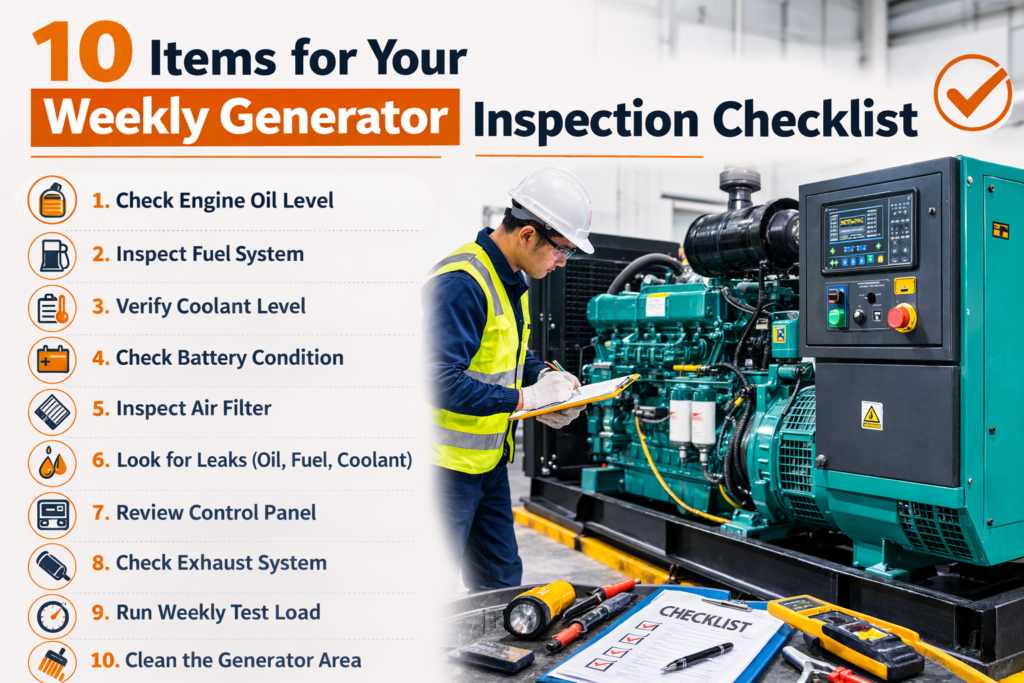
1. Check the Engine Oil Level
The first step in a weekly generator inspection checklist is checking the engine oil level. Diesel engines rely on proper lubrication to reduce friction and prevent internal wear.
Use the dipstick to verify that the oil level is within the recommended range. If the oil is below the minimum level, add the correct grade of engine oil specified by the manufacturer.
2. Inspect the Fuel System
Fuel problems can quickly affect generator performance. During a weekly diesel generator inspection, check the fuel tank, fuel lines, and filters for leaks, contamination, or blockages.
If the generator has a water separator, drain any accumulated water to prevent injector damage.
3. Verify the Coolant Level
A properly functioning cooling system prevents the engine from overheating. As part of the generator weekly maintenance checklist, check the coolant level in the radiator or expansion tank.
Also inspect hoses and clamps to ensure there are no visible leaks.
4. Check the Battery Condition
Battery failure is one of the most common reasons generators fail to start. During your weekly generator inspection, examine the battery terminals for corrosion and confirm that connections are tight.
If the generator uses maintenance batteries, verify that electrolyte levels are adequate.
5. Inspect the Air Filter
A clogged air filter restricts airflow and reduces engine efficiency. When performing a weekly diesel generator maintenance check, inspect the air filter for dust and debris.
Clean or replace the filter if necessary to maintain proper engine performance.
6. Look for Oil, Fuel, or Coolant Leaks
Leaks are often early signs of mechanical problems. A good generator inspection checklist should include a visual inspection of the engine, pipes, and connectors.
Addressing small leaks early can prevent more serious equipment damage later.
7. Review the Control Panel
The generator control panel provides key information about system performance. During a weekly generator maintenance inspection, check the panel for alarms, warning lights, or abnormal readings.
Confirm that voltage, frequency, and operating indicators are within the normal range.
8. Inspect the Exhaust System
The exhaust system should be securely installed and free from corrosion or loose connections. A proper diesel generator inspection routine includes checking the exhaust pipe and muffler.
If the generator produces unusual smoke during operation, it may indicate engine or fuel problems.
9. Perform a Weekly Test Run
Running the generator regularly ensures that all components function correctly. During a weekly generator test run, start the generator and allow it to operate for about 10–15 minutes.
Pay attention to vibration, noise levels, and system indicators while the generator is running.
10. Keep the Generator Area Clean
Dust, oil residue, and debris can affect cooling and maintenance access. The final step in your weekly generator inspection checklist is cleaning the generator and the surrounding area.
Maintaining a clean environment also makes it easier to detect leaks or loose parts.
Conclusion
A consistent weekly generator inspection checklist is one of the simplest ways to keep a diesel generator reliable and ready for use. By regularly checking oil levels, fuel systems, cooling components, batteries, and other key parts, operators can reduce the risk of unexpected failures.
Routine inspections not only improve equipment reliability but also help extend the service life of the generator, making it a dependable source of power when it is needed most.
FAQ: Weekly Diesel Generator Inspection
How often should a diesel generator be inspected?
Most generators should be visually inspected every week, with more detailed maintenance performed monthly or according to the manufacturer’s service schedule.
Why is a weekly generator inspection important?
Regular inspections help identify leaks, worn components, and system faults before they cause generator failure.
How long should a generator run during a weekly test?
A generator should typically run for 10–20 minutes during a weekly test to ensure the engine and electrical systems operate properly.
What are the most common generator problems found during inspections?
Low oil levels, weak batteries, clogged air filters, and fuel contamination are among the most common issues discovered during routine inspections.
Can poor maintenance damage a diesel generator?
Yes. Lack of maintenance can lead to overheating, engine wear, and premature failure of key components.