When considering backup power, one of the most common questions people ask is: Is diesel generator power safe?
The short answer is yes — diesel generators are safe when they are installed correctly, operated outdoors, and maintained properly. Like any mechanical equipment that involves fuel and electricity, safety depends largely on how the unit is used.
This guide explains the real risks, practical safety standards, and answers the most common questions about diesel generator use.
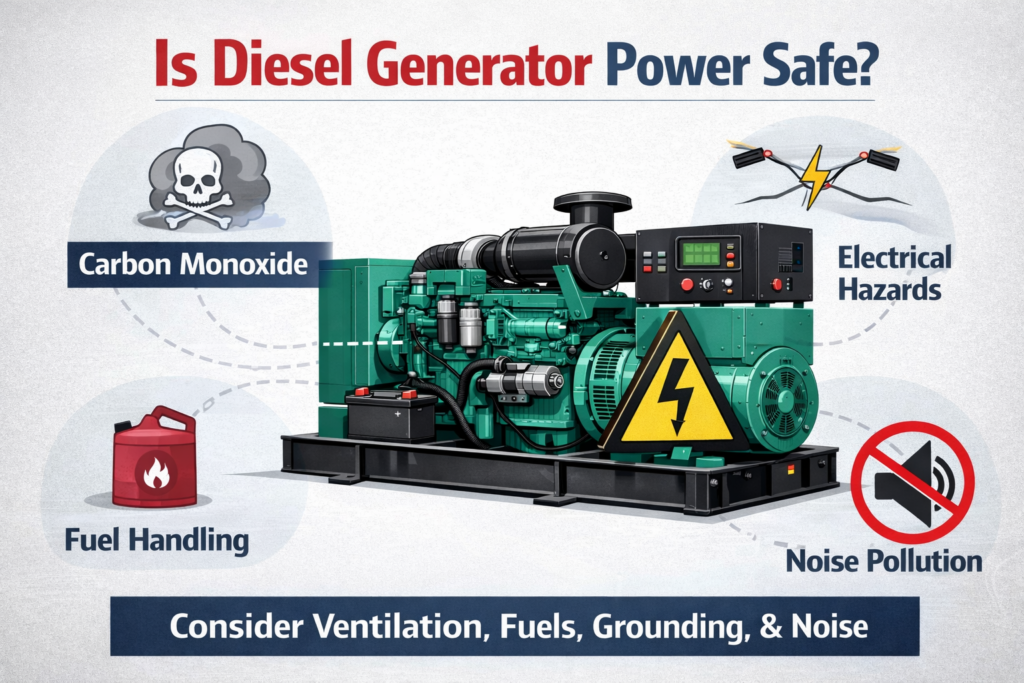
How Diesel Generators Work — and Why They’re Generally Safe
A diesel generator produces electricity by burning diesel fuel to power an engine, which turns an alternator to generate electrical energy.
Modern diesel generators typically include:
- Automatic voltage regulation
- Overload protection
- Circuit breakers
- Low-oil shutdown protection
- Emergency stop systems
In real-world applications, most safety incidents are not caused by generator failure. They are usually the result of improper placement, poor ventilation, or unsafe electrical connections.
When installed according to manufacturer instructions and local electrical codes, diesel generators are widely used in homes, hospitals, factories, and construction sites without issue.
The Main Safety Risk: Carbon Monoxide
The most serious hazard associated with diesel generators is carbon monoxide (CO) exposure.
Carbon monoxide is:
- Invisible
- Odorless
- Potentially fatal in enclosed spaces
A diesel generator should never be operated:
- Inside a home
- In a garage (even with the door open)
- In a basement
- Near windows or air vents
Safe practice requires placing the generator outdoors, at least 20 feet (about 6 meters) away from buildings, with the exhaust directed away from occupied areas. Installing carbon monoxide detectors inside the home adds an important layer of protection.
Nearly all generator-related fatalities are linked to indoor use.
Is a Diesel Generator Safe for Home Backup Power?
Yes — diesel generators are commonly used for residential backup power during outages.
To ensure safe operation at home:
- Install a manual or automatic transfer switch
- Ensure proper grounding (earthing)
- Avoid overloading the generator
- Use cables rated for the generator’s output
A transfer switch is especially important because it prevents backfeeding electricity into utility lines, which can endanger utility workers and damage equipment.
Professional installation by a licensed electrician is strongly recommended.
Can a Diesel Generator Run Overnight?
Many diesel generators, particularly industrial or standby models, are designed for extended operation.
you may also want to read our guide on how long a diesel generator can run continuously to understand runtime limits and fuel capacity planning.
Running a diesel generator overnight can be safe if:
- The unit is rated for continuous operation
- It is installed outdoors in a ventilated area
- Oil and coolant levels are checked
- Fuel supply is adequate
- Routine maintenance has been performed
Diesel generators routinely operate for long hours in hospitals, data centers, and telecom facilities. However, regular monitoring and scheduled servicing are essential.
Fire and Fuel Safety
Diesel fuel has a higher flash point than gasoline, which means it is less volatile and generally safer to handle. This reduces — but does not eliminate — fire risk.
To minimize risk:
- Turn off the generator before refueling
- Allow the engine to cool before adding fuel
- Store diesel in approved containers
- Keep fuel away from open flames or sparks
Fuel spills should be cleaned immediately.
Electrical Safety Considerations
4Proper electrical installation is critical for safe diesel generator use.
Key safety practices include:
- Installing a transfer switch
- Grounding the generator correctly
- Using appropriately rated extension cords or wiring
- Avoiding overloading beyond the rated kilowatt capacity
Improper DIY wiring is one of the leading causes of generator-related electrical accidents.
Frequently Asked Questions (FAQ)
1.Is it safe to run a diesel generator in heavy rain?
It can be safe if the generator is protected by a weatherproof enclosure or canopy. The unit must remain dry, and water must not contact electrical components.
2.Can a diesel generator explode?
Under normal conditions, diesel generators do not explode. Diesel fuel is less volatile than gasoline. Incidents are extremely rare and usually related to improper fuel handling.
3.How far should a diesel generator be from the house?
At least 20 feet (6 meters) away from buildings, with the exhaust directed away from doors and windows.
4.Is diesel generator exhaust dangerous?
Yes. Diesel exhaust contains carbon monoxide and other emissions. Always operate the generator outdoors in a well-ventilated area.
5.Is it safe to refuel while the generator is running?
No. Always shut down the generator and allow it to cool before refueling.
6.How long can a diesel generator run continuously?
Depending on the model, many diesel generators can operate for 8–24 hours or longer with proper maintenance and adequate fuel supply.
7.Are diesel generators safe for indoor use if windows are open?
No. Opening windows does not provide sufficient ventilation to prevent carbon monoxide buildup.
Conclusion
Diesel generator power is safe when used correctly. The equipment itself is designed with multiple protective systems, and diesel fuel is relatively stable compared to gasoline.
The primary risks — carbon monoxide exposure, improper wiring, and unsafe refueling — are preventable through correct installation and responsible operation.
When placed outdoors, properly grounded, connected through a transfer switch, and maintained regularly, a diesel generator provides a reliable and safe backup power solution for both residential and industrial use.