Choosing the right power source is important for homes, construction sites, and outdoor activities. Many people often ask: what’s the difference between a generator and an inverter generator?
While both devices produce electricity, they work in different ways and serve different purposes. Understanding these differences can help you choose the right solution for backup power, portable energy, or industrial applications.
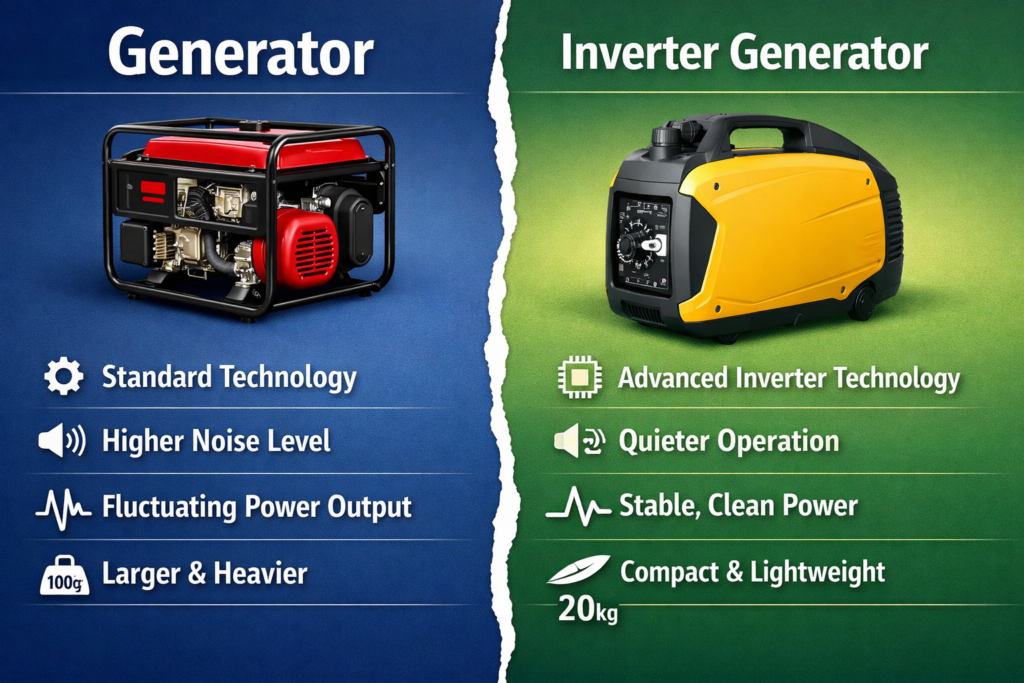
What Is a Traditional Generator?
A traditional generator (often called a conventional generator) produces electricity directly from an engine-driven alternator. Most models use gasoline or diesel engines to rotate a generator head that creates electrical power.
Traditional generators typically produce AC power directly from the alternator, and the voltage and frequency depend on the engine speed.
Key Features of Traditional Generators
- Higher power output capacity
- Suitable for industrial and heavy-duty applications
- Usually more affordable for large power demands
- Often used as diesel standby generators for factories and buildings
Because the electricity is generated directly, the output waveform may fluctuate slightly. This is usually acceptable for tools, pumps, lighting systems, and industrial equipment.
Common applications include:
- Construction sites
- Industrial factories
- Hospitals and commercial buildings
- Emergency backup power systems
What Is an Inverter Generator?
An inverter generator is a more advanced type of portable generator that produces cleaner and more stable electricity.
Instead of sending AC power directly to the outlet, an inverter generator uses a three-step process:
- The engine generates high-frequency AC power
- The power is converted into DC
- An inverter converts it back into stable AC power
This process produces a stable sine wave, which makes inverter generators safe for sensitive electronics.
Key Features of Inverter Generators
- Clean and stable electricity output
- Lower noise levels
- Better fuel efficiency
- Lightweight and portable design
Because of these advantages, inverter generators are commonly used for:
- Camping and outdoor activities
- RV power supply
- Charging laptops and smartphones
- Home backup for small appliances
Generator vs Inverter Generator: Key Differences
| Feature | Traditional Generator | Inverter Generator |
|---|---|---|
| Power Output | Higher capacity (industrial use) | Lower to medium capacity |
| Power Quality | Standard AC output | Clean and stable sine wave |
| Noise Level | Generally louder | Much quieter |
| Fuel Efficiency | Less efficient | More fuel efficient |
| Portability | Usually larger and heavier | Lightweight and portable |
| Best Use | Construction, factories, backup power | Camping, RVs, electronics |
The main difference between a generator and an inverter generator lies in power quality and portability.
Traditional generators focus on high power output, while inverter generators focus on clean electricity and efficiency.
Which Generator Is Better for Your Needs?
The right choice depends on how you plan to use it.
Choose a Traditional Generator If:
- You need high power output (50kW – 200kW or more)
- The generator will run industrial equipment
- It will be used as a standby generator for buildings or factories
Choose an Inverter Generator If:
- You need portable power
- You want quiet operation
- You need to power sensitive electronics
For example, large diesel generator sets used in factories or hospitals are almost always traditional generators because they provide stable long-term power and high capacity.
Cost Comparison
Another important difference is the price.
Inverter generators usually cost more per kilowatt because of their advanced electronics and inverter technology. However, they save fuel and produce cleaner electricity.
Traditional generators are generally more cost-effective for large power applications, especially diesel generator sets above 50kW, 100kW, or 200kW.
Maintenance and Durability
Traditional generators typically have simpler mechanical structures, making them easier to maintain in industrial environments.
Inverter generators rely on electronic control modules and inverters, which may require specialized repair if problems occur.
However, inverter generators often run at variable engine speeds, which helps reduce wear and improve fuel efficiency.
Conclusion
Understanding the difference between a generator and an inverter generator is essential when selecting the right power solution.
- Traditional generators provide high power output and are ideal for industrial or backup applications.
- Inverter generators provide cleaner electricity, quieter operation, and better portability.
If you need reliable power for construction sites, factories, or commercial buildings, a diesel generator set is usually the best option. For camping, RVs, or small household electronics, an inverter generator may be the better choice.
FAQ: Generator vs Inverter Generator
1. Are inverter generators better than traditional generators?
Inverter generators are better for sensitive electronics and portable use, but traditional generators are better for high-power industrial applications.
2. Can inverter generators power a house?
Yes, but most inverter generators are designed for small loads. Larger homes usually require standby diesel generators.
3. Why are inverter generators quieter?
Inverter generators use variable engine speed technology, allowing the engine to run slower when less power is needed, which reduces noise.
4. Which generator is safer for electronics?
An inverter generator is safer because it produces clean and stable sine wave electricity.
5. Are diesel generators inverter generators?
Most diesel generators are conventional generators, not inverter generators. They are designed for high power output and continuous operation.